Archive for category Playing
Demoitis
Posted by Gavin Bradley in Labels, Management, Playing, Production, Singing, Writing on April 11, 2013
Studioitis isn’t the only widespread malady in the world of recording. There’s also the much more serious demoitis.
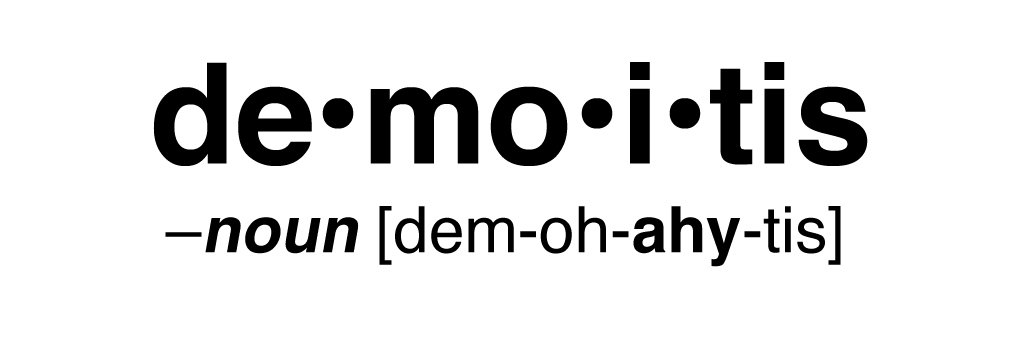
Artists often make quick ‘demo’ versions of songs they’ll consider recording properly later on. In fact, during the making of an album dozens of versions of a song might circulate for the consideration of the creative team in the studio, and sometimes the business team at the label. The differences in the demos may be subtle: slight variations in volume levels, an altered word here and there, a few bars edited out. Or they may be sweeping: a new draft of the lyrics, a different tempo, drastically rethought instrumentation. But when a collaborator or an executive fights to retain elements they’ve become attached to in an earlier iteration of a track they are said to have a case of demoitis.
Debates follow. Often heated, sometimes explosive.
‘I just can’t get used to that new line in the second verse. It feels awkward to me.’
‘Cut those four extra bars before the bridge. The demo got right into it…I wouldn’t have changed that.’
‘This new tempo doesn’t give me the energy the demo had. What happens if we speed up the final mix digitally?’
Though experienced musicians often agree when something is ‘wrong’ with a song, music is ultimately a subjective thing. And it can be particularly difficult to maintain perspective on an ever-changing song you’ve heard played back a hundred times. How do you decide what goes out to the public?
First, try to hold back on presenting a song to the label or the artist’s management until it’s as close to finished as possible.
Making creative decisions by committee can leave a piece of music bloodless. Especially when the incubatory environment of the studio has been opened up for business executives to phone in some input from their offices. I’ve been involved in situations where two ‘final’ versions of a song were given to a room of A&R people at a label to vote on. In the end they asked for the two ideas to be merged, creating a frankensteined chorus that didn’t really preserve what was good about either version.
In my opinion, the Clive Davises and David Geffens of the world—music business executives who aren’t necessarily experienced in creative work but have a golden ear—are few and far between. (Ahmet Ertegun at Atlantic and Berry Gordy at Motown are examples of label presidents with an inside understanding of craft. They spent a good amount of time writing and producing themselves.) From what I’ve experienced, the majority of music executives are business-minded people with a love for music. While they will jump at the opportunity to participate in a creative decision, much of their input seems arbitrary. Suggestions seem to be lifted from trends or rules they’ve heard bandied about in the office.
‘How about a dubstep breakdown in the bridge?’ was popular this past year.
‘What about a filtered radio voice in the intro?’ was big with executives around the turn of the millenium.
I don’t want to fault execs for wanting in on the excitement of making music, but if it’s actually a situation of ‘I want to be able to tell people I suggested this [obvious, trendy] idea in a successful radio hit’ while at the same time being vague enough to claim no responsibility if the song flops…well that’s not helpful. Nine times out of ten the suggestion made becomes an awkward corporate mandate for some clashing parameter the studio peeps now have to work into the song. It’s not a solution; it’s just created more problem-solving work. As evidenced by the most successful labels and managers, who send a trusted producer and artist into the studio and have the wisdom not to open the door until the souffle rises, I think it’s better for all involved if executives use their creativity to come up with a kickass marketing plan instead. That’s something the artist likely can’t do, and the expert executive can take full credit for.
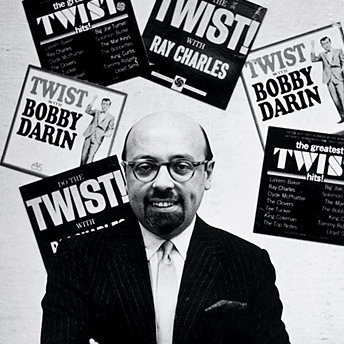
Ahmet Ertegun: Good Executive Input
What about the decision-making that happens between the creatives behind that closed studio door?
Many times I’ve worked with a relatively green artist that wants to take demos home to get the input of their friends, family or significant other: input from people who aren’t necessarily creative but are either regarded as a Average Joes in the target market or a good barometer of whether the song is right for the person they know. I get it. Songwriting is new and mysterious, and on top of that you’ve been thrown into the studio with an opinionated person like me that you don’t know well enough yet to trust.
To be frank, it takes time to develop a sense of what’s working in the studio. When people have to go outside for input, it’s because they’re aware on some level that they don’t have enough experience to feel it when something—a line, a snare sound, a chorus vocal has squarely hit the mark. It’s a palpable feeling most experienced people in the room agree on when it happens. I started to recognize it after I’d been recording for about 6 years, and it took another few years to begin to know how to problem-solve things that weren’t giving me that ‘right’ feeling. (Don’t panic. Some people are faster at getting it than I was. And I make it my mission to help new artists get there ASAP.)
There’s a strong argument against doing a whole lot of market testing in lieu of relying on the gut instincts of a few professionals when you’re being creative. I’m gonna go all granola here and say that the origin of the song’s feelings and ideas is situated inside of the writers. I don’t see how polling others outside of the process can bring the song closer to its emotional center, and therefore closer to emotional impact for listeners.
The beauty of making music is that any new song you work with may have its own set of rules that generate a new approach. When you’re truly open to where a song wants to go, there are always new worlds to visit. No one person in the room has the answers, but if everyone drops their egos and taps in to what the song is dictating, a common direction usually emerges. In some cases of an extreme loss of perspective on the part of the makers, I think you can get an opinion about structural issues or the overall approach from another trusted professional who has their craft down.
Sometimes the demo does have something special about it.
For my solo work sometimes I like to write lyrics at the mic, changing words and lines until the puzzle pieces come together. And I usually feel the most effective vocal deliveries are the takes I record while I’m writing, moments after I’ve come up with the words I’m about to sing. That’s because I’m usually writing about something that’s going on with me at that time, and there can be an honest moment of catharsis or discovery in that first take. I’m not averse to re-approaching the vocal later on to try different things, but almost inevitably I end up with final vocal tracks made up mostly of my ‘discovery’ takes. One great thing about modern recording technology is when I’m co-writing with an artist I can get proper recordings of everything we come up with, using the same microphone as we go. This is like shooting a documentary film, trying to capture something that’s happening now to the singer, or even just a moment of honesty as they recall something in their past with great clarity. You never know when you’ll capture lightning, and I think it’s valid to fight to preserve moments like these from a demo, tweezing out individual recorded lines and conforming them to a later version of the song if necessary.
Other times—usually with seasoned performers that possess both highly developed vocal control and an actor’s ability to inhabit a song—I’ve found that capturing a great performance is a two-step process toward the end. 1. Have them take it home and learn the finalized version of the lyrics. 2. Have them come back in and record it three or four times, more or less straight through, over a fully produced track. The disjointedness of recording line by line with this type of performer tends to break their flow. What they want is to hear the song roll for a while so they can get inside it again and access the emotions of what they’re singing. As a producer, this is more akin to letting an actor play their part in a fictional narrative film. They’re skilled at using the power and nuance of their voice to create an illusion that this is happening to them right now. In truth it might be something they wrote years ago, or a fictional situation someone else wrote about.
When it comes to choosing vocal takes—or guitar solos or drum tracks—it doesn’t really matter how you got there. Whichever take gives you a chill down your spine is the one to go with. Though another version may be sonically better, or tighter, or more lushly produced…I’ll always feel that the version to go with is the one that made me, the producer, feel something. That’s a distillation, ultimately, of a producer’s job.
Sound Of The Funky Drummer
Posted by Gavin Bradley in Mixing, Playing, Production, Publishing on November 18, 2009
Funky Drummer
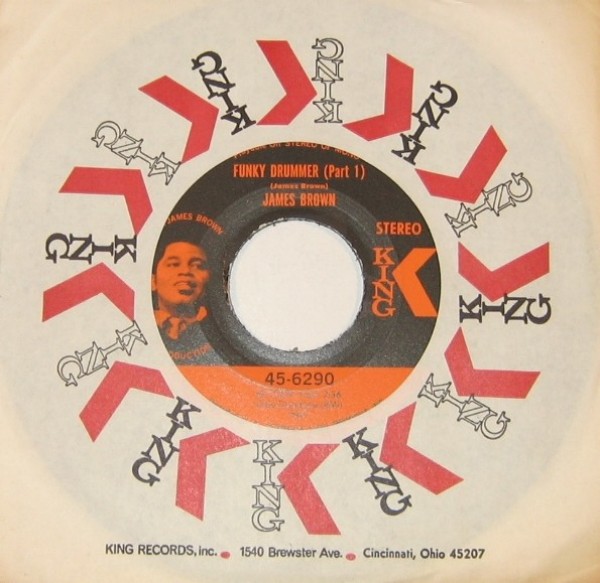
1. At a 1969 recording session drummer Clyde Stubblefield played a beat on a James Brown song that came to be called ‘Funky Drummer’.
The beat was so in-the-pocket that in the middle of the song Brown asks the rest of the band to lay back and give Stubblefield an 8-bar drum break to really sink into the groove.
The track was released, split in half, on two sides of a 7″ single in 1970 but was never included on an album.
In The Jungle Groove
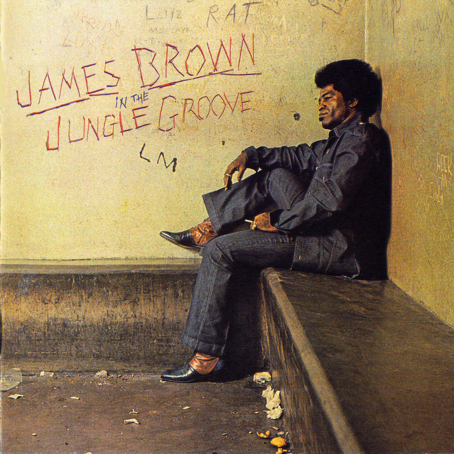
2. Some James Brown rarities and remixes were culled together in 1986 and released on a compilation called ‘In The Jungle Groove’. For the first time ‘Funky Drummer’ was available in its uninterrupted form, clocking in at 9:15.
The compilation also included a 3-minute Funky Drummer ‘Bonus Beat Reprise’ put together by New York DJ Danny Krivit which was essentially the cleanest and deepest bar of Stubblefield’s solo jam looped relentlessly, peppered only with the occasional guitar jab or James Brown vocal grunt to mark time.
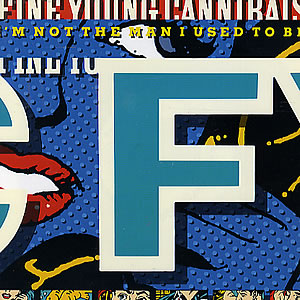
Not The Man
3. Producers the world over knew what this Krivit re-edit was for.
Aside from a critical mass of rappers including Biz Markie, Big Daddy Kane, Ice T, Ice Cube and De La Soul jumping on the loop as the basis of new tracks, it began showing up as a rhythmic grid laid over pop songs far and wide. From 1988-1990 in particular it was an undeniable bastion of street cred for artists, and it is thought to be the most-sampled recording in history.
Fine Young Cannibals were among the first to arrive on the scene with the sweeping ‘I’m Not The Man I Used To Be’ from ‘The Raw And The Cooked’, lightly funkified with muted guitar riffs weaved into a sped-up Stubblefield groove.
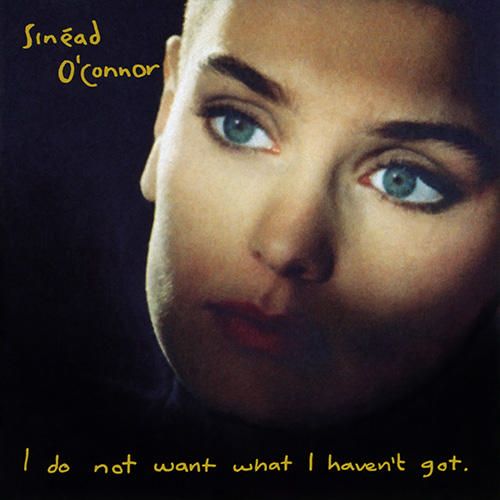
Stretched
Sinead O’Connor’s ‘I Am Stretched On Your Grave,’ from her seminal ‘I Do Not Want What I Haven’t Got’, LP was unapologetic about its use. Bottom-heavy and slightly slowed, the loop was upfront, holding the track down under O’Connor’s acapella vocal for over a minute before synth bass and eventually a celtic violin riff are introduced.
Some of the other best-known upfront overlays of the beat from that period include ‘Mama Said Knock You Out’ and ‘The Boomin’ System’ by LL Cool J, as well as ‘Freedom 90’ and ‘Waiting For That Day’ by George Michael.
Baby Love Child
4. Although the loop became fused with the aesthetic of its golden period, it hasn’t gone bad. The straight-up funk of it is impossible to deny, so it has continued to appear in a steady trickle, the producers dealing with its oversaturation in various ways.
Perhaps wanting in on the action while still recognizing its burgeoning overuse, the Beastie Boys threw in one dirty bar of the loop at the end of ‘Shadrach’. On 1993’s ‘Reachin’ (A New Refutation Of Time And Space)’ Digable Planets tastefully reinvented it by chopping it up and weaving it subtley into the jazzy beats of ‘Where I’m From’ and ‘Swoon Units’.
Japan’s Pizzicato Five did some crafty cut-and-paste on ‘Baby Love Child’ by laying the loop over an interpolation of the chords of the Righteous Brother’s ‘You’ve Lost That Loving Feeling’. (If the song title is meant to be a mash-up of ‘Baby Love’ and ‘Love Child’ by the Supremes, we really have a mutt of a track here.)
B-Boy Stance
Genre-defying artist K-Os brought the loop full circle on 2004’s excellent ‘Joyful Rebellion’ LP by putting an aggressively distorted Funky Drummer upfront again on ‘B-Boy Stance’–as if to credit it, at least partially, as the roots of his rap attachment.
The only other drum loop that may approach the ubiquity of the Funky Drummer is the drum break on ‘Amen Brother’ by The Winstons. Virtually responsible for the entire genre of music known as Drum & Bass (or Jungle) the aural etymology of the sample, from inconspicuous b-side break to 24-hour assault on Drum & Bass internet radio stations, is tracked brilliantly in this video by Nate Harrison.
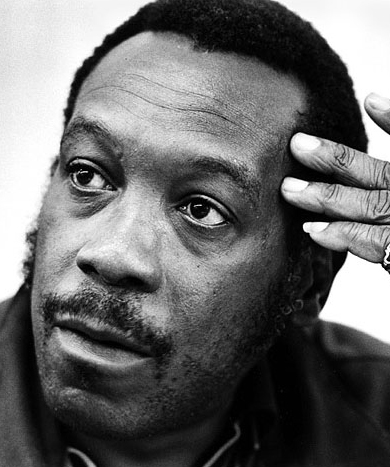
The Funky Drummer a/k/a Clyde Stubblefield
So…what about Clyde? The most-sampled man in history is in need of a liver transplant, but his musician friends have had to rally to raise the funds for him.
Since James Brown regularly taught his band the songs in his head part by part, it’s unclear whether Brown or Stubblefield came up with this beat. But because rhythmic contributions to music are not considered copyrightable ‘intellectual property’ in the same way melody and lyrics are, Stubblefield would not have been credited as a writer on the song either way. As such, beyond the original session fee, he wasn’t entitled to further royalties.
This lack of respect, at least legally, for rhythmic innovation is probably rooted in the fact that the system of notating chords and melody developed centuries ago in Europe is not equipped to capture rhythmic ‘feel.’ Because a drum beat lacks melody, it’s not considered unique enough to copyright. It’s interesting to note, then, that over the past 30 years popular music has become more and more dominated by rap, with hooks that are gradually becoming more rhythmic…we actually value melody less than we used to.
It’s also interesting to see that the unstoppable appropriation of audio and video in our new digital world has given rise to new fair-use philosophies such as that of Creative Commons licensing. Some people believe that a degree of freedom with intellectual property creates a healthy creative climate.
Still, in recent years the American Federation Of Musicians has developed something called ‘Neighbouring Rights’ in a bid to channel royalties to the individual players on recordings. Had this system existed at the time the Funky Drummer was laid down on tape, Clyde Stubblefield might have been up there on the Forbes list.
The Polaris Music Prize
Have you noticed in recent years that Beyoncé and Alicia Keys have performed on every major American awards show? As much as I respect Ms. Keys (and am not particularly offended by Beyoncé) the only way I can explain their awards-show ubiquity over, say, The Roots, is that they’ve made it into The Club…an elite club of ‘artists chosen to be promoted by the majors’.
Widely accepted as the institutions that bestow the highest honours in music, England has the Brit Awards, America has the Grammys and Canada has the Junos. As viewers we watch thinking that we’re seeing musicianship rewarded…yet it always feels curiously like we’re seeing advertisements for pop albums we are expected to buy.
But last week I attended a refreshing and inspirational night here in Toronto: the Polaris Music Prize gala. There’s been an alternate reality taking shape in the world of music awards: since 1992 the UK has had the Mercury Prize, since 2001 the USA has had the Shortlist Music Prize and since 2006 here in Canada we’ve had Polaris.
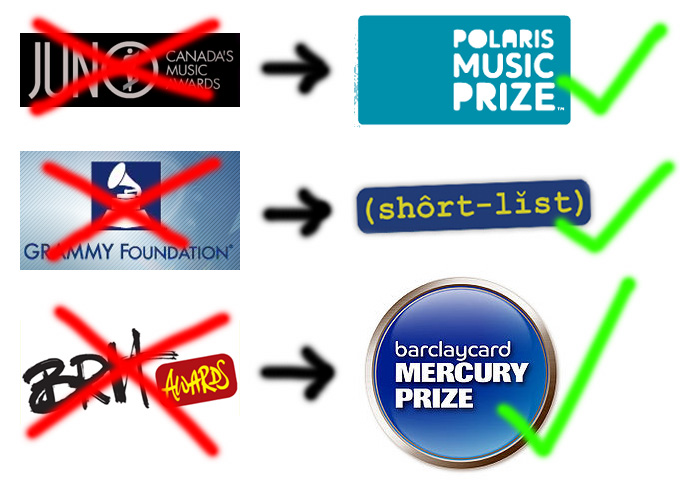
Anarchy in the UK, the USA…and Canada.
All three Prizes are similar: the award goes to the band responsible for the best album released that year. Not the album that sold the most copies, but the best album…determined via large numbers of music critics submitting lists and/or voting. For the American Short List prize, nominees’ albums must not have reached Gold sales status (500,000 copies).
The Polaris winner gets a $20,000 cash prize, often used by the band to fund their next endeavor. This year’s ‘long list’ of 40 nominees included veteran folkster Leonard Cohen and newly-indie rapper K-Os. The narrowed shortlist of 10 bands performed live at the gala, simulcast on MuchMusic and CBC radio. CBC host Jian Ghomeshi was one of ten Canadian luminaries that each introduced a nominee, waxing personal about how the album affected them.
At one point a food-fight broke out between the tables of the obvious forerunners: celebrated new wave band Metric, Somalian-born rapper K’Naan and esoteric rock band Patrick Watson–who won the audience over by performing as a marching band weaving through the audience, wearing backpacks that sprouted bouquets of lights over their heads, the singer manipulating his vocal with effect pedals hanging from his neck, the rest of them handing out cookie sheets and wooden spoons for the audience to bang together as a room-wide rhythm section.
Newfoundland’s Hey Rosetta! stunned the audience with a performance that came in like a lamb and out like a lion, featuring a huge ensemble of supporting musicians crafting a painstaking climax around singer Tim Baker’s unmistakeable voice. The surprise of the evening came at the end, however, when hardcore punk band Fucked Up took the stage as the final performers and then walked away with the prize. Indeed, we’re looking at an unbiased jury process here!
I was shocked at the sheer amount of talent laid out before us that night. I was exceedingly proud to be doing music in Canada, which the world has begun to recognize is a disproportionate exporter of great music. Ask me if I cared about the Grammys after that…?
Before The Music Dies
Posted by Gavin Bradley in Labels, Management, Playing, Publishing, Radio, Singing, Writing on July 28, 2009
Hot documentary alert: I just saw a 2006 film discussing the changes in the structure of the music business that have led us to where we are now.

Before The Music Dies
Erykah Badu, Bonnie Raitt, ?uestlove, Eric Clapton and Branford Marsalis chime in, describing the frightening effects of changes to radio station ownership laws, the practice of song testing and the merging of hundreds of record labels into four majors. The film’s directors, Andrew Shapter and Joel Rasmussen, demonstrate how a songwriter, producer and video director can manufacture a pop artist out of a young female model with virtually no musical talent.
Definitely worth watching, though the filmmakers seem to have a strong bias in favour of retro blues-based music.
Watch the trailer here. Download the film here. Thanks to Steve and Chris for passing it along.
Precision Performance
Posted by Gavin Bradley in Playing, Production on May 18, 2009
My instrument is the piano. However, despite (or as a result of?) many years of classical training, I do not consider myself a serious session player. When I’m recording, I play what I need to play in bits and I edit my performances until they are what I hear in my head.
But I want to show you an example of a precision player.

James Bryan
Guitarist James Bryan tours with Nelly Furtado. He’s also a writer-producer and a member of The Philosopher Kings, Prozzak and Sunshine State. James is one of Canada’s top session guitarists. I’ve been lucky enough to work with him on my own material and some songs I’ve produced for other artists.
He doesn’t own an endless array of guitars and effects…just the basics are necessary. But this guy shows up at a session and upon listening to the song once, he can pretty much ascertain exactly what needs to be done: which guitar(s), how many overdubs, what rhythms will be best. Give him the first chord and he can map out the rest of the chord changes in a minute or two. His feel and musical instincts are incredible.
What really sets him apart, though, is his precision. This is someone who began playing his instrument obsessively as a small child and never gave up practicing. Each strum is effortlessly controlled in rhythm, velocity and expression. He often needs only one take; two takes at most for a particularly difficult passage.
Here’s an example of that precision: stereo acoustic rhythm guitars he recorded on a song for me. (I’ve muted everything but the drum track and his two acoustic guitars.)
No editing necessary: his performance is perfectly even on both sides. He’s a joy to work with. If you want to be a live touring musician or session player, aim for this degree of precision.
-
You are currently browsing the archives for the Playing category.
-
Author
-
Archives
- April 2013 (1)
- August 2011 (1)
- November 2010 (1)
- August 2010 (3)
- July 2010 (1)
- March 2010 (1)
- January 2010 (1)
- November 2009 (1)
- October 2009 (2)
- September 2009 (1)
- August 2009 (1)
- July 2009 (4)
- June 2009 (7)
- May 2009 (10)
-
Meta